
MOORE & MOORE LIVING JOURNAL

Therapy | Birth Trauma & Treatment | Birth Trauma Awareness Week July 1st-8th

"No one ever told me it was going to be like this". "I felt completely helpless and out of control". "I felt like no one was taking my views or feelings into account". "Maybe this is what everyone experiences and I am a bad Mum for not coping like everyone else".
In an age when women are being empowered to be strong and authentic, I wish from the bottom of my heart that individually and as a society we could refrain from using the term "yummy mummy". It creates a status of "motherhood perfection" which is an unhealthy and toxic ideal which breeds amongst social media and baby and toddler groups. I wish women could truly and genuinely support each other more.
25-34% of all women find some aspect of their birth experience traumatic and it can lead to prolonged distress for everyone involved (Mum, Dad (including same sex couples) and baby). Key themes that are often part of birth trauma are feeling out of control, unheard, helpless or fearing they might die or their baby might die during labour. It can lead women to fear having another pregnancy or avoid/delay getting pregnant again.
When we talk of birth trauma, we mean Post Traumatic Stress Disorder (PTSD) that occurs after childbirth. We also include those women who may not meet the clinical criteria for PTSD but who have some of the symptoms of the disorder. Quite often this can be in the background of Postnatal Depression and/or Anxiety and identified at assessment.
Characteristic features of PTSD include:
An experience involving the threat of death or serious injury to an individual or another person close to them (e.g. their baby).
A response of intense fear, helplessness or horror to that experience.
The persistent re-experiencing of the event by way of recurrent intrusive memories, flashbacks and nightmares. The individual will usually feel distressed, anxious or panicky when exposed to things which remind them of the event.
Avoidance of anything that reminds them of the trauma. This can include talking about it, although sometimes women may go through a stage of talking of their traumatic experience a lot so that it obsesses them at times.
Bad memories and the need to avoid any reminders of the trauma, will often result in difficulties with sleeping and concentrating. Sufferers may also feel angry, irritable and be hyper vigilant (feel jumpy or on their guard all the time).
It is important to remember that PTSD is a normal response to a traumatic experience. The re-experiencing of the event with flashbacks accompanied by genuine anxiety and fear are beyond the sufferer's control. They are the mind's way of trying to make sense of an extremely scary experience and are not a sign individual 'weakness' or inability to cope.
There are risk factors for Post Natal PTSD which include a mix of objective (e.g. the type of delivery) and subjective (e.g. feelings of loss of control) factors. They include:
Lengthy labour or short and very painful labour
Induction
Poor pain relief
Feelings of loss of control
High levels of medical intervention
Traumatic or emergency deliveries, e.g. emergency caesarean section
Impersonal treatment or problems with the staff attitudes
Not being listened to
Lack of information or explanation
Lack of privacy and dignity
Fear for baby's safety
Stillbirth
Birth of a damaged baby (a disability resulting from birth trauma)
Baby’s stay in SCBU/NICU
Poor postnatal care
Previous trauma (for example, in childhood, with a previous birth or domestic violence)
In addition, many women who do not have PTSD suffer from some of the symptoms of PTSD after undergoing difficult birth experiences and this can cause them genuine and long-lasting distress. If you or someone you know is suffering from any of these symptoms do tell them help is available.
Treatment: I offer both Trauma Focused CBT and EMDR which are the NICE Guidelines recommended treatments and are really effective. Compassion is an integral part of treatment and helping clients to develop a compassionate mind and heart towards themselves and the circumstances they find themselves experiencing.
A typical course of treatment ranges between 6-12 sessions. The initial phase is all about learning how to understand what is happening and bring a compassionate awareness to it. The middle is about processing and updating unhelpful thought or belief patterns linked to the experience. And the third is about enhancing inner qualities of compassion as part of resilience for the future and parental life. Relapse prevention may include revisiting the place of birth, speaking to staff involved or attending a hospital lead reflection group.
As part of my perinatal work, I will often involve partners. Father's access treatment too where the adjustment to change in role and increase in responsibility activates significant distress. Therapy considers the wider context and is here to help!
"Just wanted to say thank you for all your help so far, I know it’s your job, but really couldn’t have chosen a better therapist to reprogram my mind and help me become a more tolerant, relaxed person. For the first time at aged 29 I feel like I’m really starting to enjoy my life!
Your emphasis on kindness, compassion, mindfulness and self care has been particularly key for me in this, as combined with the CBT approach has been a perfect combination and I don’t think either would’ve worked without the other. In a way (at the moment) I’m feeling quite grateful for the way the birth panned out and that it’s allowed us to have this time to bond when he’s more aware of his surroundings rather than when he was born and didn’t really know what was going on!" - Juliet
Recommended Resources:
https://www.makebirthbetter.org/about
http://www.birthtraumaassociation.org.uk/
Instagram: @birthbetter @mumologist @drrebeccamoore @parenthoodinmind

Deliciously Ella Interview on Self-Care Values & Authentic Living | Moore & Moore Living

Ella, Matt & Austin Mills
Spring Blog Guest Feature | Moore & Moore Living
Images @deliciouslyella
Ella Mills is the co-founder and co-CEO of Deliciously Ella with her husband Matt Mills. Deliciously Ella began as a plant-based ingredients blog and quickly grew to become a leading healthy food and lifestyle brand. Their products can be found in their MaE deli in Marylebone and stores across the UK including Waitrose, Selfridges, Ocado, Sainsburys, Whole Foods and lots of independent stores. The book 'Deliciously Ella Everyday' was the fastest selling debut cookbook in the UK and translated in 16 languages. We are all excitedly awaiting the latest book on pre-order due to launch in August this year.
Deliciously Ella’s story is testament to how vulnerability can be the birthplace of so much growth and creativity. They are continuous source of inspiration to us at Moore & Moore Living and we are over the moon to have Ella feature as our first quarterly blog guest.

Due for release August 2018
In the past, physical and mental health difficulties have been a significant part of Ella’s journey. Her story reminds us of our potential as human beings to move through adversity and suffering and live a values rich life. It’s pretty incredible, really, to imagine that, after a long period of ill health, she set out on a personal mission to better support herself by creating new plant-based recipes and sharing them on Instagram. It’s even more amazing that this would go on to have such a positive global impact as a leading international food and lifestyle success. Their deep commitment to their authentic values based lifestyle nourishes them and their thousands of customers and social media followers.

Austin @mr_austin_mills pictured here with Ella is a global icon too with 21.3k followers on Instagram. Oh, the cuteness!
Deliciously Ella is designed to improve the health and lifestyle of their growing community in an enjoyable and sustainable way (and still get your 5 a day!). Their authentic, compassionate and interactive engagement with their community generates confidence in their approachable, nutritious and delicious food (without all the fuss and fear).
Read on for this fascinating interview for insights in the lovely phenomenon which is Deliciously Ella:

A seasonal delight packed with flavour and goodness
MML: How have your self-care values helped you in your life journey so far, particularly at your lowest moments, including when you suffered with physical health problems and depression, and when embracing the uncertainty which came with taking important business risks?
EM: It's taken me a long time to put self-care into my day to day routine and it’s not something I always prioritise as much as I probably should, but I’ve been blown away by how much it helps. Ultimately self-esteem, a sense of calm and belief in ourselves are pivotal to success in any area of your life so finding time for tools that support those pursuits is incredibly important. I really notice the difference in the days I take better care of myself – I’m more energetic, sharper, more positive and all round happier.

Creating a sense of calm
MML: The idea of designing a lifestyle that we don’t need a holiday from is very appealing. What helps to sustain you?
EM: Yoga is the thing that helps me most. I try to practise most mornings before work; some days I love it and feel like I’m flying, other days feel slower and clumsier but every time it creates a sense of physical and emotional space and openness that does wonders for me – it feels like a mental reset each morning. Going to bed early is my other favourite thing to do and I find that makes a huge difference to me, I like going to bed around 10 and getting up at 6 so that I have a nice chunk of quiet time before the world wakes up and pings 100 emails at me every minute!
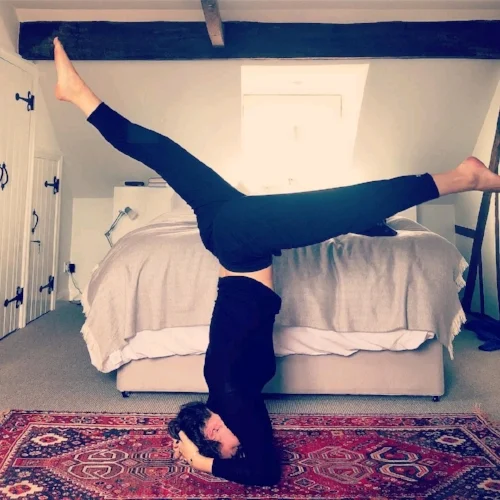
Daily yoga
MML: What advice would you give anyone wanting to cultivate and sustain an authentic and meaningful social media-based community?
EM: Find an area to cover that you’re comfortable sharing on a day to day basis. Personally, I love sharing food; cooking is a passion for me and something I do pretty much every day, and I love sharing my experiments with everyone. I wouldn’t feel as comfortable having our accounts based around my personal life, however, I’m happy to share elements and open up about what’s going on but on a 24/7 basis I would find it too much and quite honestly it would make me feel too exposed, so subconsciously I’ve created my own boundaries that means what I share is consistent and useful for our audience and for me.

Our favourite, red velvet cake
MML: As the DE experience and community network expands, what drives you and Matt to be the leading healthy food and lifestyle brand in the UK?
EM: I just feel that there’s so much to be done in terms of getting people excited about fruit and veg so that we can all genuinely enjoy getting our five a day, and there’s so much space on supermarket shelves for products made of a few simple, natural kitchen cupboard ingredients!

Pea and courgette pasta with a creamy spinach sauce
MML: What’s important to you about working in partnership with your husband?
EM: I love being part of a team and sharing what we do fully with someone else – that support really builds confidence. I definitely lack confidence at points and working in this way has been a game changer for me. We build each other up in the tough moments and feel equal joy at points of celebration, which is really special.

Teamwork makes the dream work ;)
Cultivating and sustaining balanced self-care in life is an ongoing learning process that at times can be overwhelming and confusing for us all. Ella's story is living proof of our human potential and that adverse life experiences are an opportunity to grow and move though life with purpose and meaningful connection. If this is something you would like to get a little help on where to begin and further explore then sign up to our website newsletter on the homepage for irregular goodness and news on our latest gatherings. We look forward to connecting.

Mindfulness | Rolling Your Eyes at the Word Mindfulness Yet?
Rolling your eyes at the word mindfulness on your social media streams yet? You're not alone. It's almost as if it is being treated like a new product that we occupy until the next one comes out and suddenly we no longer want it.
However, mindfulness is not just the latest phone accessory and the collection of stuff in our lives does not make us happy. In fact, we strongly value the role in mindfulness to be the foundation in our ability for connection with ourselves, others and the world around us.
At Moore & Moore Living, we appreciate that life is hard. We also deeply appreciate the importance of connection in our ability to creativity learn from and move through our moments of suffering and joy in life.
Knowing how to respond rather that react to our experience is really valuable in that we can meet any distress or challenge with greater awareness and ability to take care of our needs. At the same time, we can also be more fully present and authentically seen and heard as our true selves in the pleasurable moments.
Things to Try:
Start with the basics - Informal mindfulness practice is about how to apply mindfulness principles to how you go about your daily routine. Formal practice is having set practice time that is dedicated through guided or formal exercise.
Attitude - Practice contacting your daily routine with an openness and curiosity like you are experiencing it for the first time induldging all your senses. A truly multi-sensory and immersive experience opportunity on tap.
Bring Awareness to Your Sensory Channels - See, hear, touch, smell and taste.
Connection Ideas - Shapes, textures, colours, temperatures, collective/individual sounds, tastes and sensations.
General Routine Tips - Allocate time in advance to source healthy nutrition, hydrate throughout the day, have your lunch outside or go for mindful walk, set a realistic exercise regime ( have 3 quality yoga classes rather that squeezing in 5 for the sake of it), go to bed earlier and get up earlier to have early morning time in whichever way sets the tone of self-care. Open the windows and listen to the dawn chorus (bed by 10 and up at 6am), check in with yourself three times a day to promote awareness of your needs physically, emotionally and psychologically, keep an end of day gratitude/appreciation journal. Read Breathe and other related helpful magazines.
Formal Practice - Headspace app, 3 min breathing space video using link https://youtu.be/amX1IuYFv8A and the website https://www.mindful.org is a personal favourite which covers a whole range of life domains.
If you like this then sign up to the newsletter for our new free ebook resources due to be launched very soon :)
Therapy | CBT - Evidenced based treatment for common mental health problems

CBT - Evidenced based treatment for common mental health problems
Moore & Moore Living
CBT is a scientific evidence based form of talking psychotherapy. The approach treats depression, a range of anxiety disorders and a number of other mental health related difficulties. Due to its effective recovery outcomes, it is the National Institute of Clinical Excellence's (NICE) recommend treatment for the above presentations. CBT has expanded and developed in exciting ways into its contemporary form to enable meaningful, transformative and life enhancing journeys for many people.
CBT At Moore & Moore Living:
Moore & Moore Living provide an informal and deeply personal experience. We appreciate that it can be hard enough to access therapy without traveling to, and sitting in, a stuffy clinical waiting room or uninspiring therapy space. We do not want therapy to become an additional stressor in itself. Therefor, we offer clients the option to access specialist CBT by visiting our Elm Hill practice in Norwich or from the comfort of their chosen space through Skype. Our Elm Hill practice space is lovingly designed and welcoming, while our Skype appointments retain our unique approach with additional flexibility in line with your current diary commitments. Seeing clients reach their goals and gaining new, healthier, ways of living so that they can move forward living the life important to them, is hugely rewarding.
"Online therapy has worked wonders for me. I can connect with Catherine as if I am in her office + found sessions working from day one + gave me practical tools. I re-found joy. I was skeptical that it would work like "normal" therapy. How wrong I was. I had lost all sense of joy + anxiety was at an all time high, being verbally abusive to my wife and self-harming. I am much more mindful of my day and am so grateful." - Sam
Initial Treatment Phase - generates an understanding of the current problem within a CBT framework, identifying meaningful goals and treatment structure.
The Middle Phase - will be an active period of implementing new alternative way of responding rather that reacting to one's difficulties from a intellectual, emotional and behavioural perspective. This is a hugely empowering and freeing experience as the problems are no longer as distressing or being maintained.
The Final Phase - is all about the client becoming their own therapist and using the new skills and learning on a frequent basis. Relapse prevention planning, winding down sessions and monthly booster session planning as relevant.

Compassion | If It Doesn't Open..It's Not Your Door

If It Doesn't Open...It's Not Your Door
Moore & Moore Living
If it doesn't open, it's not your door.
First up, let's share some love for the unknown author of these powerful words. Isn't it fascinating that we spend more of our life entering or exiting doorways going about our daily life. Yet, we all have had or continue to have that metaphorical door that doesn't open. We tighten our grip of the handle, shake it, lean against it with all our weight with frustration and shout at it in exacerbation. We struggle, become stuck and we suffer.
But what if we could sit down on the kerb on the opposite side of the street, take a breath of care into the sensations of distress in our body, look at the door from a distance and ask ourselves "how does persisting to try and open the door serve me in my life right now?"
What if we took time to acknowledge the unintended consequences all the persisting at the door has on our health and overall quality of life in the present time? As we approach the new year of 2018, let's seize the opportunity to drop the struggle and embrace our individual life journey by accepting the life that is here fully. By that, I mean intellectually but also experientially in our hearts.
You see, when we accept that the door is not meant for us, we are no longer stuck and in suffering mode as there is space for our feelings to come and go all on their own. We stand up, take a deep breath and walk down the street, trusting the process, trusting that our door will come along in time. And, in the meantime, we breath for the present and live the life that is important to us now.
Photography Anna Jacobsen @weareherenow
Therapy | OCD Awareness Week: Our client's top 5 tips for reclaiming your life

OCD Awareness Week: Our client's top 5 tips for reclaiming your life
Moore & Moore Living
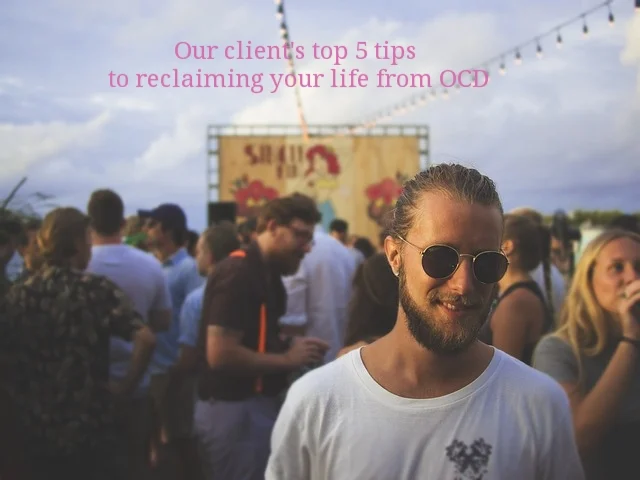
We really value our clients understanding and process awareness of reclaiming their life from psychological or emotional distress. See some awesome tips kindly shared ( thank you :)) by one of our client's on how they did it.
1 Know Your Disorder
OCD can be a bewildering and overwhelming problem. Experts in the field and sufferers who have recovered are an excellent source for understanding your condition. Books, podcasts and blogs are all available to help you get a handle on what’s been going on and what to do about it.
2 Believe Recovery Is Possible
Take from the examples of these lived experience that recovery is possible and you have the capacity within you for positive change.
3 Have Faith In Your Therapist
If you feel you need help in this endeavour do your research and find a therapist you can work with. It is important to pick the right therapist and the right therapy and then put your faith in their ability to guide and help you in your task. Their experience helping others just like you should encourage and enable you to make the changes required to get better.
4 Have Faith In Yourself
Have faith in your ability to do the work necessary and in your ability to cope and thrive doing what is asked of you. If you struggle to have faith in yourself then practice having an open mind.
5 Do Not Hesitate
Putting off therapy and continuing to do what your OCD demands means more discomfort, doubt and behavioural responses in the form of your compulsions. These just perpetuate the vicious cycle of OCD. You may have lost many weeks, months or years to the disorder and you deserve a life without OCD.

Therapy | Finding the Right Therapy + Therapist

Guide to Finding the Right Therapy +Therapist
Moore & Moore Living
Choosing a therapist these days for some can feel like a swiping exercise. Similar to online dating but a different kind of relationship. Some clients report having had various therapists over a period of time but things didn't quite come together and it just wasn't quite right but they couldn't put their finger on it. Finding the right therapist is really crucial to getting the most out of the experience and making those all important desired changes to assist you to live the life you aspire.
1) Suffering from Depression or an Anxiety Disorder - Look for a registered Cognitive Behavioural Therapists (British Association for Behavioural + Cognitive Psychotherapies - BABCP) or Clinical Psychologist (British Psychological Society - BPS). The BABCP website has a registered Therapist list you can search by location. Look for one that specialises within the problem area you are experiencing and check for experience post qualification. Specialised CBT Therapists/Clinical Psychologists may also have trained in other contemporary approaches within CBT including Acceptance + Commitment Therapy (ACT), Functional Analytical Psychotherapy (FAP), Compassion Focused Therapy (CFT) and Eye Movement Sensitisation Reprocessing (EMDR). The Therapist will assist with any recommendations of medication which can be managed by your GP along side therapy for maximum results where relevant.
2) Suffering from Bi-Polar, Schizophrenia or Personality Disorder - Look for a Psychiatrist/Therapist that specialise within these areas and have considerable experience. The Therapist will assist with any recommendations of medication which can be managed by a Psychiatrist along side therapy for maximum results and stabilisation.
3) Start Vetting - Don't be afraid to do a full social media and background check. On their main website or page, look for registration details and indication of continued professional development, professional standards of clinical practice and client reviews. You want to get an experience of other clients who have gone through the therapeutic experience with good outcome recovery. After all, you want to be reaching those therapy GOALS!
4) Connection - See if you gravitate towards their bio including practice values and profile image. Obviously, it is not a dating site but feeling potential that you can connect with the Therapist as early on in therapy as possible is priceless. Is this someone you can be open with?
5) Initial Face to Face/Online Assessment - Key areas to be identified include area for therapy focus/problem area, collaboration of treatment plan, outline + frequency of sessions and treatment duration, therapy goals, use of measurement of change (questionnaires etc) and the space for end of assessment questions, feedback and reflections from therapist and client.
6) Reflections - Does the Therapist facilitate a professional space of safety, confidentiality, openness, hope for change, honesty, compassion, lack of judgement, mindful presence (not checking their phones etc - sadly this does happen) and creates opportunities for empowerment to change and collaboration together in reaching your identified goals?
Space | 5 Mega Benefits of Plants In The Office
5 Mega Benefits Of Plants In The Office
Moore &Moore Living
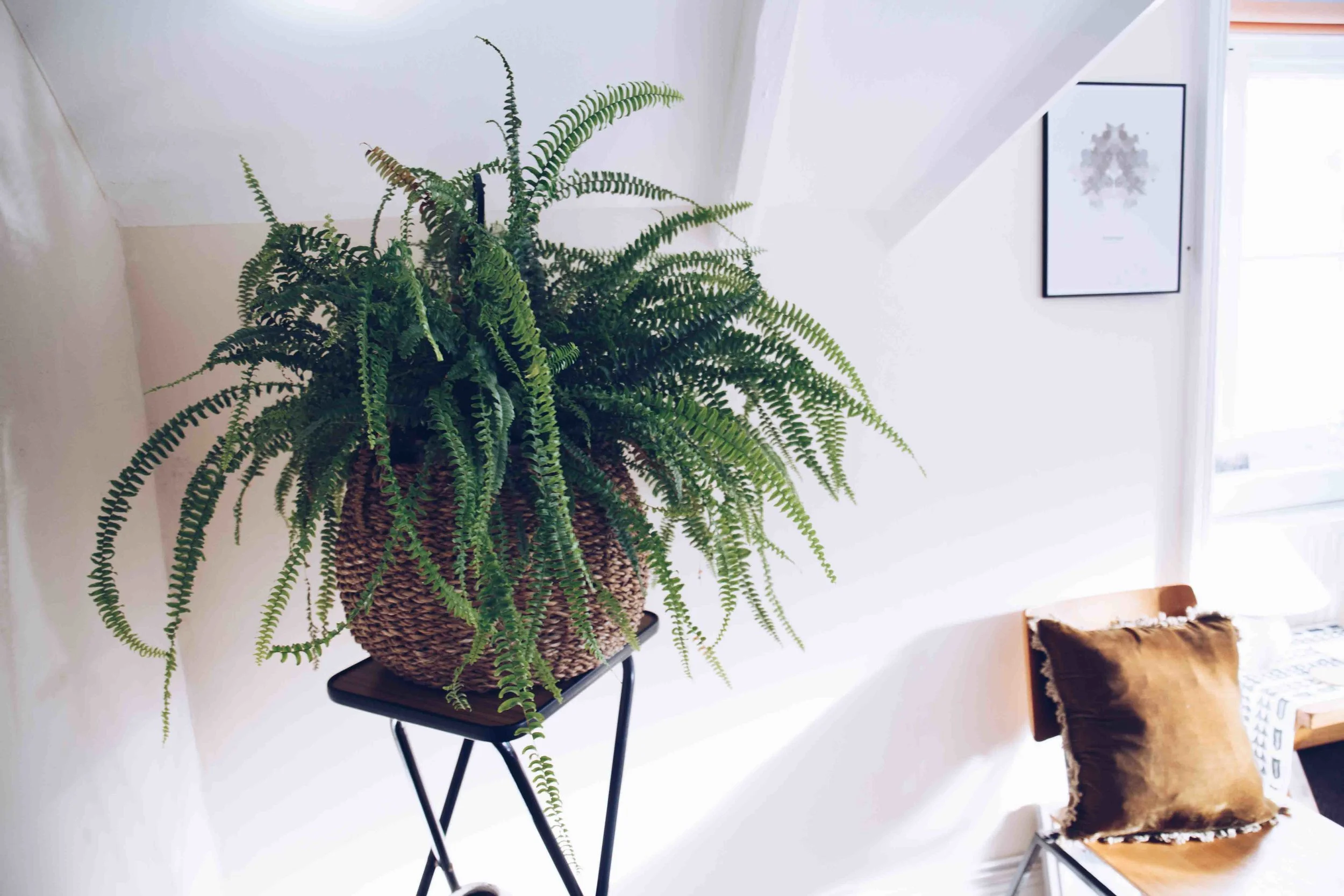
You will be keen to go green in your workspace after reading these ace benefits of plants in the office. There are many plants that are low cost, low maintenance and easily accessible. Air plants and Terrariums are currently trending in many contemporary office spaces. If you are confused about what to buy there are various plants that will thrive in the office space that is warm including our favourite the Spider plant. We have made a list below for you.
1) Reduce Stress
A UTS 2010 study found that having just one plant in the office is all it takes to make a difference. Staff who had plants placed in their offices showed reductions in stress levels and emotions linked to depression and anxiety of a magnitude of 30 to 60%, while those with no plants recorded increases in stress and negativity of 20 to 40%, over the 3-month test period.
2) Look Healthier
Plants help to reduce dry skin due to their transpiration process which releases moisture, creating a humidity level exactly matching human comfort range of 30-60%.
3) Increase Productivity
Plants reduce excess carbon dioxide in the air therefore improving cognitive task concentration, focus, reduction in mistakes and a 10-15% increase in productivity for computer based workers.
4) Reduce Sickness & Absence
Plants reduce absenteeism by up to 50% and minor illness by 30%. This helps businesses to maintain productivity and reduce absence costs.
5) A Nicer Place To Work
Oxford Brookes University reinforce that indoor plants are not only cheaper than expensive office décor but they also offer a guarantee of positively enhancing perception of wellbeing. Plants promote a welcoming and relaxing space.
Plants That Thrive In Offices: Spider Plant, Snake Plant, Peace Lilly, Air Plant, Prothos, Terrarium, Succulents and Cacti. Most of these will live happily in a warm office and survive with a watering once per week and have some daylight. Check out http://inhabitat.com/9-low-maintenance-plants-for-the-office/ if you want to explore more unusual indoor plants including the top 18 houseplants for purifying the air you breathe according to NASA.